Your business already gives you enough to manage. WordPress updates, backups, hosting questions, and website upkeep don’t need to become another job.
Savage Web Solutions offers website maintenance services for business owners who want a clearer plan for keeping their sites looked after. We’ll discuss your setup, the responsibilities you want help with, and the support that makes sense for your business.
A website can look fine while routine jobs pile up behind the scenes. If you’re not sure who handles these responsibilities, it might be time for a website maintenance conversation.


Keep WordPress, themes, and plugins on the maintenance list. The work should account for your website’s setup and the checks needed after relevant changes.
Discuss the hosting environment, account responsibilities, and technical assistance your website needs. Hosting and website maintenance should work together, with clear boundaries between providers.
Plan how website copies are created, stored, and used if recovery becomes necessary. Backup needs should reflect how frequently your content, inquiries, or store data change.
Address routine software and access responsibilities that help reduce avoidable risks. Maintenance supports sensible precautions, but no service can promise that a website will never have a security issue.
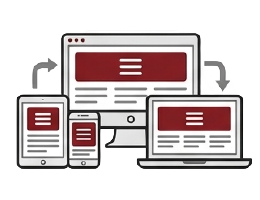
Give important pages and customer actions attention. Forms, navigation, mobile layouts, and other agreed features need more than an occasional glance at the homepage.
Have a defined way to ask questions and request help. Content changes, troubleshooting, and additional work depend on the support included in your agreement.
WordPress, themes, and plugins receive updates over time. Keeping track of those changes is part of maintaining the setup your website relies on. That still matters when you haven’t added a new page in months.
A broken link or form problem might not announce itself. Looking at important customer actions can reveal issues that deserve attention before they become a familiar frustration for visitors.
If something goes wrong, you’ll want to know what backups exist and how recovery would work. Those questions are easier to answer when they’ve been considered before a problem appears.
Hosting provides the environment that serves your website to visitors. It’s part of the setup behind your pages, images, and features, even if you rarely think about it.
Website hosting and maintenance are connected, but they aren’t the same service. Paying for hosting doesn’t automatically mean someone is updating WordPress or checking your contact form.
Some questions involve the website itself; others need the hosting provider or another service. An agreed support process helps make those handoffs less confusing.
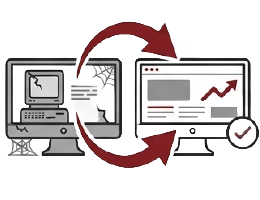
Your existing before-and-after examples show how design and structure can change a website’s presentation. Once that work is done, the site still needs attention behind the scenes.
A redesign and ongoing maintenance serve different purposes. One changes the website; the other gives its continuing upkeep a plan. If you’ve invested in a site that fits your business, it makes sense to discuss how it will be supported.

WordPress website maintenance involves looking after the software, themes, and plugins your site relies on. Updates, backups, account access, and checks of important features all deserve attention.
Your setup determines the work involved. A simple business website has different needs from a WooCommerce store or a site with booking tools. We’ll discuss those requirements and define the maintenance responsibilities, including where hosting and additional technical support fit.
Shopify website maintenance focuses on the parts of your store you manage, including your theme, apps, product information, navigation, and connected tools. Shopify handles its platform infrastructure, but your storefront still needs attention.
Outdated information, app changes, or awkward mobile layouts can affect the shopping experience. Maintenance can include reviewing those areas and discussing ongoing changes. Some issues depend on Shopify or an app developer, so the support scope should account for that.
Wix website maintenance focuses on keeping your pages, business information, forms, and connected features useful and up to date. Wix manages the underlying platform, while the content and setup of your individual site still need care.
That might mean updating service details, reviewing mobile layouts, checking links, or investigating a form that isn’t behaving as expected. The work depends on your editor, apps, and any custom functionality, with Wix support involved when needed.
Every business website benefits from accurate information and working customer actions. Contact details change, services evolve, links become outdated, and new content can introduce layout issues.
General website maintenance can include text and image updates, navigation reviews, form checks, and attention to important pages on mobile. If your site uses another platform or a custom setup, share the details so we can discuss what support is available and what access would be needed.
Whatever platform you use, you should know who handles the upkeep and where to go with a question. A website maintenance plan puts those responsibilities in writing instead of leaving them to assumptions.
We’ll discuss the work you want help with, how requests are handled, and which tasks need separate approval. Hosting, backups, recovery options, paid software, and larger changes should be addressed according to your platform and the agreed service.
Spend less time wondering what needs updating or who to contact. Let’s define the website maintenance responsibilities you’d like help managing.
Explore our website projects to see how we approach content, layout, and the actions customers need to take.
Define the recurring work, how it fits your website, and who handles each responsibility. The schedule should reflect the setup rather than being left to guesswork.
Establish where hosting fits and how you’ll ask for help. Your agreement should explain what assistance is included and what needs another provider’s involvement.
Discuss the changes you expect to request. Updating a phone number and building a new booking system are very different jobs, even if both begin with “a quick website change.”
Look at the setup and discuss an appropriate scope. This is where hosting, updates, backups, support, pricing, and any existing issues need to be addressed.
Our website work connects design, content, and functionality. That perspective helps keep maintenance conversations focused on how your site serves your business, rather than just what appears in the dashboard.
We’ll talk through the work in everyday language. If a decision affects your costs, website, or responsibilities, you should understand it without needing to learn a new technical vocabulary.
Some needs belong in a maintenance plan. Others call for repair, design, or SEO work. Keeping those services distinct helps you understand what you’re paying for and why.
Website maintenance services are priced around the work involved and the support you need. A straightforward informational site is different from a store with transactions and several connected tools.
Tell us how you use the website and what you want help managing. We can discuss the appropriate arrangement without putting you into a package that doesn’t match the work.
The number of pages is only part of the picture. A smaller site with complex booking features may need more attention than a larger site with simple content.
Hosting, paid software, content updates, and major repairs should be accounted for clearly. A monthly fee shouldn’t leave you guessing about which responsibilities are actually covered.
Updates are a normal part of WordPress maintenance. Sometimes a change affects how existing software works together, which is why preparation and relevant checks matter.
Leaving updates indefinitely isn’t a maintenance strategy either. The useful question is how changes will be managed and what happens if a problem appears.
Website maintenance services should make that process clearer. They shouldn’t promise that every update will be uneventful or that every possible repair is included.
WordPress, themes, and plugins have different jobs, and their updates can affect different parts of the site. A change to a contact form plugin deserves attention to the form, not just a check that the homepage loads.
Knowing what the website relies on helps focus the work. It also helps identify changes that may need additional preparation or input from a software provider.
Before making changes, consider what would be needed to recover if something went wrong. That includes checking the available backups and understanding what they contain.
The official WordPress update guide recommends backing up before updating. For an active website, recovery also needs to account for information added since the backup, such as new orders. Restoring an older copy isn’t a decision to make blindly.
After relevant changes, review the functions affected by the work. That may include a contact form, navigation, product options, or another important action.
A successful update notification isn’t the same as a successful customer experience. The checks included in your maintenance plan should reflect the website and the scope of the changes, rather than relying on a single generic test.
If something stops working, the cause needs investigation. It may involve a compatibility issue, a third-party service, or a problem that routine maintenance alone won’t resolve.
The agreement determines what troubleshooting is included and when additional work needs approval. If your website already has a significant problem, explore our website repair services so we can discuss that issue first.